The reason so many nutrition plans collapse is not willpower. It is arithmetic. Counting every gram and logging every bite demands constant decisions, and decision fatigue always wins eventually. What works instead is a small set of visual rules you can apply in a restaurant, at a family dinner or in front of your own fridge.
The plate, in three simple parts
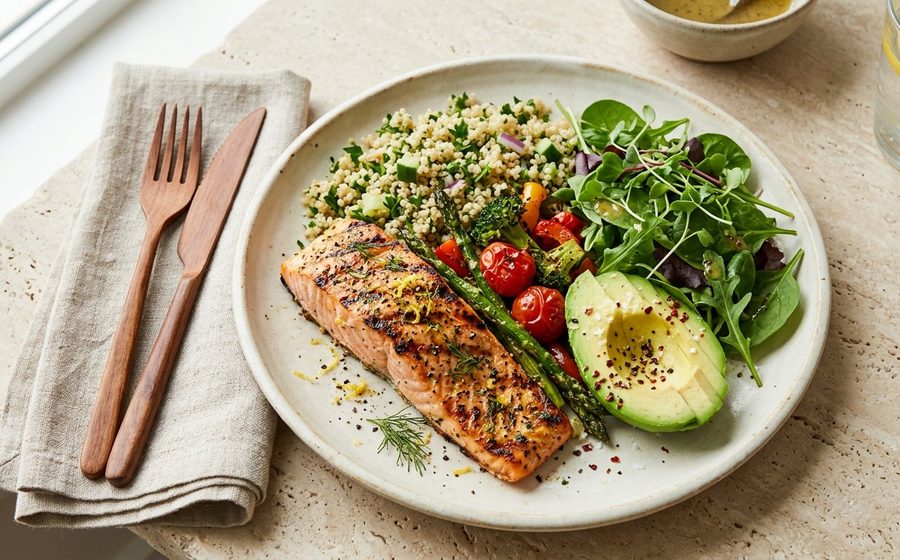
Picture a standard dinner plate and divide it mentally into three zones:
- Half the plate — vegetables and fruit. Fresh, frozen or tinned all count. Variety of colour matters more than perfection.
- A quarter — whole grains or starchy vegetables. Brown rice, oats, wholewheat pasta, potatoes with skin, corn or sweet potato.
- A quarter — protein. Fish, poultry, eggs, beans, lentils, tofu, yoghurt or lean meat.
Add a small amount of healthy fat — olive oil, avocado, nuts, seeds — and you have a meal that keeps you full, steadies your energy and supports your heart, without a single calculation.
Nutrition is not a test you pass or fail each day. It is a pattern you build over weeks. One meal never decides your health; the average of your meals does.
Breakfast: the meal people overcomplicate
Breakfast does not need to be impressive. Plain yoghurt with fruit and nuts, oats with milk and seeds, or eggs with wholegrain toast all fit the pattern and take minutes. If you are genuinely not hungry in the morning, a smaller breakfast and a proper lunch is a perfectly reasonable arrangement.
Snacks that carry their weight
The best snack is one that solves a problem — hunger between meetings, an energy dip in the late afternoon, a long gap before dinner. Useful defaults:
- Fruit with a handful of nuts or seeds
- Yoghurt with berries and cinnamon
- Vegetable sticks with hummus
- A boiled egg or a slice of wholegrain toast with nut butter
Drinks count more than most people think
Sweetened coffees, soft drinks and juices can add a great deal of sugar without ever registering as food. Water, sparkling water, plain tea and coffee are the easy defaults. If you enjoy a sweetened drink, enjoy it deliberately rather than habitually.
Eating out without abandoning your plan
Restaurant meals tend to be larger, saltier and richer than home cooking — that is the business model, not a moral failing. A few quiet tactics keep you on course:
- Order a vegetable side or starter alongside your main.
- Choose grilled, baked or steamed over deep-fried when the option exists.
- Eat slowly enough to notice fullness — the signal arrives later than most people expect.
- Treat dessert as a decision, not a default.
What about supplements and superfoods?
Very few people need supplements to eat well, and no single food transforms your health. If you have a diagnosed deficiency, dietary restriction, or a specific medical condition, targeted supplementation may genuinely help — but that decision belongs in a consultation, not in an advertisement.
Making it personal
Your plate should look like the food you actually enjoy, cooked the way your household cooks it. Cultural dishes, family recipes and comfort food can all fit — the proportions adjust, the pleasure stays. That is what makes a way of eating last.
If you would like help adapting these principles to your own routine, health conditions or goals, our nutrition team builds plans around real kitchens and real schedules.